Proudly serving Phoenix, Mesa, Scottsdale, Glendale, Tempe, Chandler & surrounding areasCall or Text 24/7: 602-449-8353
Aerial view of residential neighborhoods, stucco homes, and desert mountains in Phoenix, AZ.

Construction Portable Toilet Rentals and High-Rise Sanitation Systems in Phoenix, AZ

Phoenix Portable Bathrooms supplies construction portable toilet rentals for contractors, crews, and site superintendents across Phoenix and Maricopa County. Our fleet includes standard construction units, ADA-compliant toilets, handwashing stations, combination toilet-and-sink units, and high-rise units for vertical projects. We also provide luxury restroom and shower trailers, long-term rentals, and portable waste holding tanks when a site needs a broader sanitation setup. Each quote is scoped around workforce size, project duration, vertical access, and proximity to water and power.

Phoenix summer ground temperatures regularly top 150 degrees, while asphalt-level heat indexes push past 115. That heat load raises restroom use, evaporation, and odor-control demands during active construction. We use reinforced polyethylene tanks, high-heat enzyme-based deodorizing treatments, and route schedules tied to jobsite headcount. Our technicians work from OSHA 29 CFR 1926.51 sanitation guidance and Maricopa County Environmental Services waste-disposal requirements to help sites stay inspection-ready.

We schedule pump trucks around working hours and track service history per unit, documenting pump-outs, cleaning, restocking, sanitizer, and deodorizer visits without disrupting pours or inspection windows.

Phoenix Portable Bathrooms provides construction portable toilet rentals throughout Phoenix and the surrounding metro, including Scottsdale, Tempe, Mesa, Chandler, Glendale, and Gilbert.

★ ★ ★ ★ ★4.9/5.0 Customer Rating · 27 Years of Industry Experience · Thousands of Rentals Delivered · Licensed & Fully Insured · Serving Job Sites & Events

Construction Restroom Options & Benefits

What Are Construction Portable Toilet Rentals?

Construction portable toilet rentals provide dedicated, self-contained restroom access for residential builds, commercial buildouts, and infrastructure projects where permanent plumbing is unavailable or out of reach.

Keeping units within a reasonable walking distance of active work areas reduces off-site travel and gives superintendents a practical way to plan for jobsite sanitation.

Phoenix setups may combine standard units with ADA-accessible toilets, handwashing stations, sink-equipped units, trailers, or holding tanks according to the crew, footprint, and project phase.

Benefits of a Right-Sized Restroom Plan

A right-sized restroom plan supports productivity, hygiene, access, and predictable servicing without forcing every Phoenix jobsite into the same configuration.

  • Dedicated facilities keep crews from leaving the jobsite for restroom access.
  • Crew-based counts support sanitation planning and reduce compliance gaps.
  • Heat-rated tanks and enzyme-based treatments address Phoenix summer conditions.
  • ADA-accessible and handwashing options create a more complete hygiene setup.
  • Staged restroom banks shorten travel between active work zones.
  • Service routes can be planned around pours, inspections, and working hours.
  • Per-unit service records document pump-outs, cleaning, and restocking.
  • Site-specific quotes account for access, duration, distance, and service frequency.
Construction Site Services

Phoenix Construction Sanitation Services

Choose a setup that fits daily headcount, accessibility needs, available space, and site duration. The fleet spans core construction units, accessible and higher-capacity options, vertical-project equipment, hygiene stations, trailers, and long-term waste support.

Standard Construction Portable Toilets

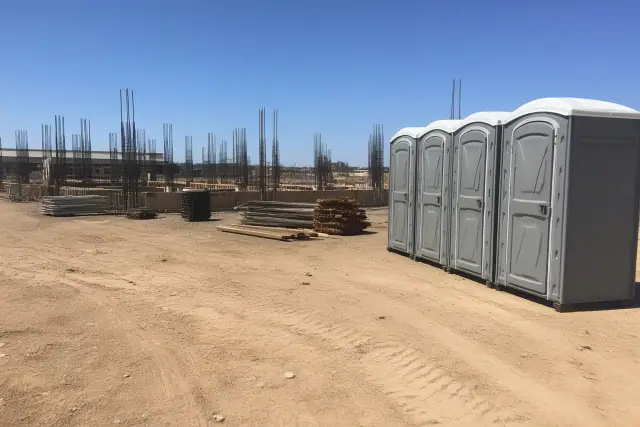
Portable toilets on a construction site with desert foothills in the background in Phoenix, AZ.

Standard units serve residential builds, commercial buildouts, and infrastructure projects. Each ships with a hand sanitizer dispenser, interior door latch, ventilation stack, and a waste tank selected to reduce servicing pressure during peak summer use.

Request Estimate

ADA-Compliant Portable Toilets

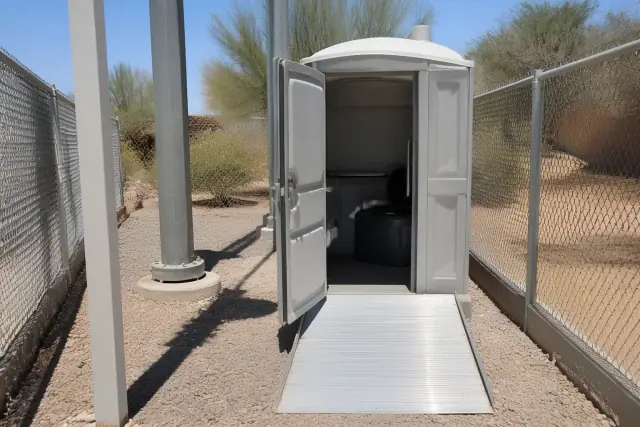
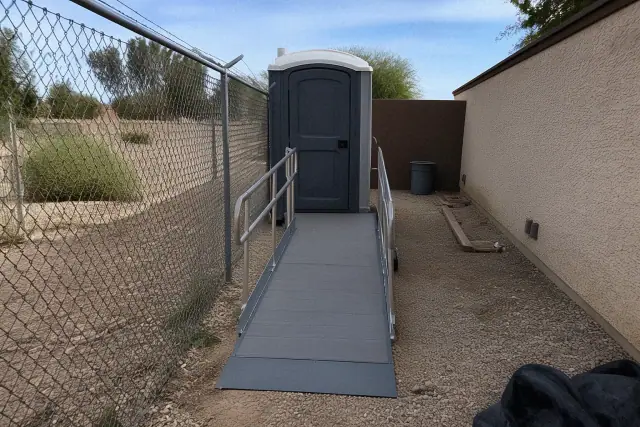
ADA-compliant portable toilet with an access ramp at a construction site in Phoenix, AZ.

ADA units provide wider doors, interior grab bars, and wheelchair-rated turnaround space. They support public-facing work, federal contracts, and the many municipal projects that require accessible jobsite restroom coverage.

Request Estimate

High-Rise Portable Toilets

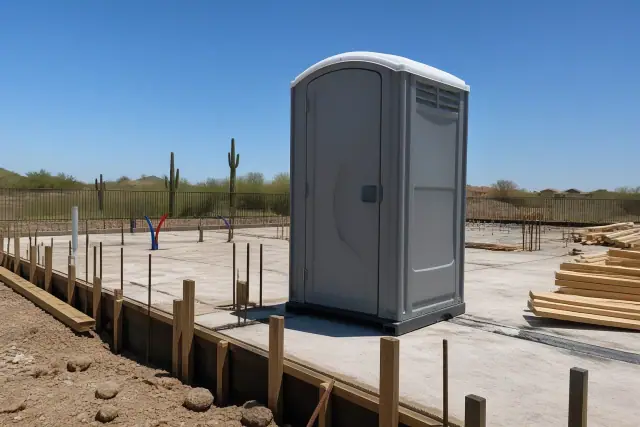
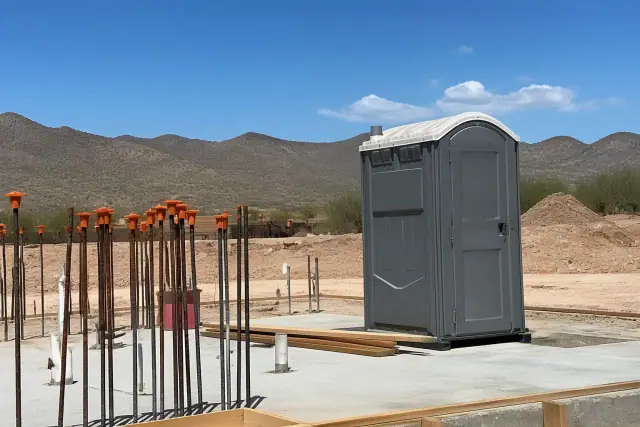
Portable construction toilet on a concrete slab foundation at a jobsite in Phoenix, AZ.

Downtown high-rise projects may stage units at ground level or hoist lightweight, reinforced equipment to working floors. We coordinate weight limits, anchoring, tie-off points, and hoist schedules with site safety managers before a unit goes above grade.

Request Estimate

Handwashing and Sink-Equipped Units

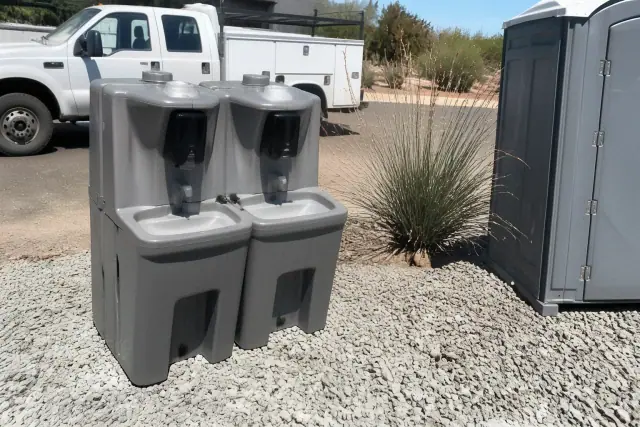
Portable handwashing station on a crushed stone surface at a construction site in Phoenix, AZ.

Standalone handwashing stations use foot-pump or hands-free designs with fresh-water reservoirs sized for crew volume. Combination toilet-and-sink units conserve space on tight urban lots where a separate station is not practical.

Request Estimate

Restroom and Shower Trailers

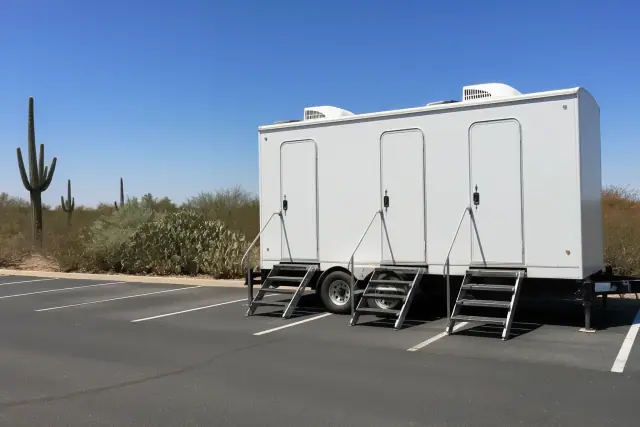
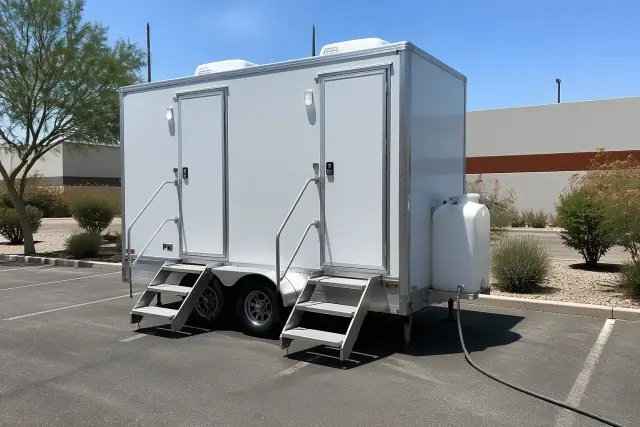
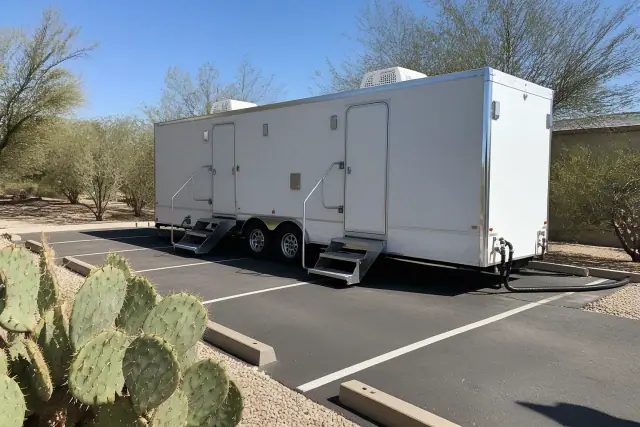
Luxury restroom and shower trailer parked on an asphalt lot in Phoenix, AZ, with desert cacti in the background.

Luxury restroom trailers add finished interiors, running water, flush toilets, vanity sinks, lighting, and climate control for executive trailers, model-home offices, and premium builds. Shower trailers support long-duration infrastructure work, disaster-response support, and remote desert sites.

Request Estimate

Long-Term Rentals and Holding Tanks

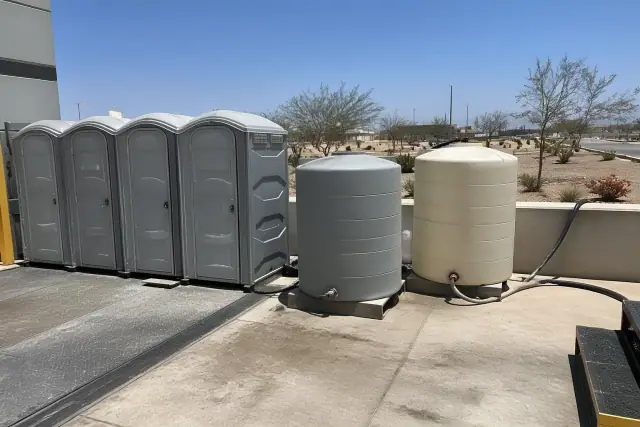
Portable toilets and holding tanks on a concrete loading dock at a jobsite in Phoenix, AZ.

Multi-month and seasonal agreements suit residential and commercial builds running six months or longer, with regular pump-outs, restocking, and odor treatment. Portable holding tanks add bulk greywater or blackwater capacity for grading operations, temporary labor camps, and sites without sewer access.

Request Estimate
Jobsite Restroom Options

Construction Portable Toilet Options

Unit selection starts with conditions at the site: crew size, shift pattern, walking distance, accessibility, vertical access, plumbing, and summer heat. The right combination can change as a project moves from grading to framing and finish work.

Standard portable toilets on a concrete jobsite foundation with desert mountains in the background in Phoenix, AZ.

Standard Construction Units

A standard unit covers the core needs of crews ranging from a two-person punch-list team to larger work zones when enough units are staged throughout the site.

  • Hand sanitizer dispenser
  • Interior door latch
  • Ventilation stack
  • Reinforced polyethylene waste tank
  • High-heat enzyme deodorizing treatment
Request Estimate
Luxury restroom trailer with a water tank connection on an asphalt jobsite in Phoenix, AZ, near desert xeriscaping.

Deluxe and Sink-Equipped Units

Deluxe units add foot-pump flushing and larger holding tanks, while combination models place a handwashing sink inside the same footprint. Select equipment can also reduce touchpoints with hands-free mechanisms and touchless sanitizer dispensers.

  • Foot-pump flush operation
  • Larger holding-tank capacity
  • Integrated handwashing sink
  • Lower-contact hygiene options
  • Space-efficient fit for infill sites
Request Estimate
ADA-compliant portable toilet with ramp access on a gravel maintenance path in Phoenix, AZ.

ADA-Accessible Units

Federal contracts and many municipal projects in Phoenix require at least one ADA-compliant unit regardless of total headcount. These units are designed around accessible entry and interior movement.

  • Wider accessible doorway
  • Interior wheelchair turning space
  • Grab bars at accessible heights
  • Useful for public-facing work
  • Available for government project planning
Request Estimate
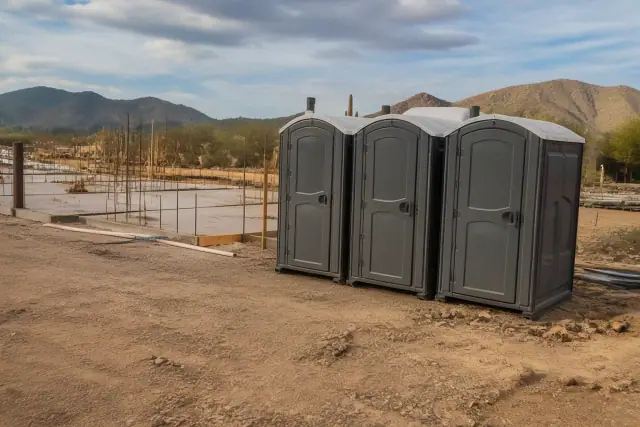
Multiple portable toilets for construction workers on a desert jobsite in Phoenix, AZ.

High-Rise and Multi-Unit Layouts

Large commercial and infrastructure projects may need restroom banks near each work zone, while high-rises need vertical coverage that limits elevator and hoist travel.

  • Ground-level or working-floor placement
  • Coverage every three to five active floors
  • Clustered banks of four, six, or more units
  • Secured anchoring and non-slip base plates
  • Coordinated hoist weights and schedules
Request Estimate
Luxury restroom trailer installed on a paved construction site in Phoenix, AZ.

Restroom and Shower Trailers

Premium trailers create a more finished restroom environment and can keep interiors livable when Phoenix temperatures reach 110-115 degrees in July and August. Shower trailers extend on-site support for crews working long shifts in remote locations.

  • Real flush toilets
  • Running water and vanity sinks
  • Finished interiors and lighting
  • Air conditioning and insulated walls
  • On-site showers for remote projects
Request Estimate
Finding Your Right Fit

Choosing the Right Jobsite Restroom Plan

A site visit or detailed phone walkthrough covers crew count, project duration, access, work zones, and proximity to water and power. From there, the unit mix and service route can account for multiple shifts, summer usage, ADA needs, project phases, and delivery distance.

Climate-Ready Equipment

Reinforced polyethylene tanks rated for high-heat deployment pair with enzyme-based deodorizing treatments formulated for triple-digit temperatures. The equipment plan accounts for the extra use and evaporation that arrive with Phoenix summers.

Site-Specific Planning

We scope workforce size, site duration, vertical access, ADA requirements, and utility access before recommending a configuration. That planning separates a tight Arcadia remodel from a Central Avenue high-rise or a Loop 202 road crew.

Inspection-Ready Servicing

Route schedules align with headcount and Maricopa County waste-disposal requirements. Per-unit service records give site supervisors documented maintenance dates for safety inspections.

What Sets Us Apart

Why Choose Us for Construction Toilet Rentals?

Phoenix Portable Bathrooms builds each recommendation around the actual jobsite instead of a generic national equipment formula. We combine Valley-specific heat planning, crew-based unit selection, coordinated delivery, and documented service routes into one sanitation plan.

Request a Site Quote

Extreme Heat and Odor Buildup

Triple-digit heat can increase use, speed evaporation, and cause ordinary deodorizing treatments to break down by midday. High-heat tanks, the right service interval, and heat-formulated odor control address those conditions together.

Undersized Unit Counts

A 15-person framing crew typically runs on two standard units plus a handwashing station, while a 100-person commercial site needs proportionally staged banks near active zones. Shift length, multiple crews, heat, and servicing downtime can all push capacity above a simple headcount calculation.

Long Restroom Travel

A single central restroom bank can cost productive time when crews work across a broad site or multiple floors. Staging units near active zones reduces off-site trips, ground-level walks, and elevator or hoist waits.

Tight or Changing Site Layouts

Infill lots may not have room for separate toilets and wash stations, while phased projects shift their active work areas over time. Combination units and movable clusters let the restroom layout follow the work.

Service Schedule Conflicts

An unplanned pump-truck visit can interfere with a concrete pour, inspection window, or restricted access period. Routing service around working hours keeps sanitation maintenance from becoming another jobsite bottleneck.

Waste Capacity and Placement Risks

An undersized holding tank can force disruptive pump-outs, while poor placement near the Salt River bed or other sensitive drainage areas can conflict with runoff and setback requirements. Tank sizing and placement review address both risks before delivery.

How it works

Our Construction Portable Toilet Rental Process

The process moves from jobsite discovery to a staged equipment plan, scheduled servicing, and adjustments as the work changes.

01.

Review Crew and Project Schedule

A site visit or detailed phone walkthrough establishes headcount, shifts, project duration, work phases, and the hours when delivery or servicing can occur.

02.

Assess Access and Utilities

We evaluate the site footprint, delivery route, vertical access, and proximity to water and power. High-rise planning also covers crane baskets, material hoists, weight limits, and safe tie-off points.

03.

Match the Unit Count and Mix

Crew count, shift length, accessibility, summer usage, and service frequency determine the mix of standard, ADA, handwashing, sink-equipped, deluxe, or trailer equipment.

04.

Plan Placement by Work Zone

Units are staged within a reasonable walk of active crews while accounting for ADA clearance, equipment movement, runoff, and changes between grading, framing, and finish work.

05.

Deliver and Secure Equipment

Equipment is delivered and positioned around site access. Elevated units are coordinated with the safety manager and secured with the anchoring, non-slip base, and tie-off provisions in the contractor's fall-protection plan.

06.

Service, Track, and Adjust

Most Phoenix construction sites receive weekly service in cooler months and twice-weekly service during peak summer heat, with pump-out, cleaning, restocking, and odor treatment on each visit. Service history is tracked by unit, and the layout can change as crew size or project phases shift.

Plan Your Jobsite Setup

Schedule a Construction Restroom
Rental
Consultation

Share your crew size, schedule, site access, and equipment needs with Phoenix Portable Bathrooms. We will walk through the unit mix, placement, service frequency, delivery, and pickup in an itemized site quote.

Construction Rental Help

Construction Portable Toilet Rental FAQs

These answers cover Phoenix rental pricing, unit counts, accessibility, permits, service schedules, trailers, high-rise placement, and long-term jobsite support.

Call Our Experts

Standard construction portable toilet rentals in Phoenix generally run $162 to $250 per month, while ADA-compliant units run about $199 to $300 per month. Rental length, delivery distance, service frequency, and add-ons such as handwashing stations or holding tanks affect the final quote.

Trailer pricing varies by size, stall count, features, and rental duration because these units include running water, finished interiors, and often climate control. An itemized quote can cover delivery, setup, servicing, and pickup for the selected trailer.

A standard mobile unit for a short event or small job generally starts around $75 to $185, depending on rental length and location within the Phoenix metro. Short rentals cost more per day because delivery and pickup are spread across a shorter period, and added service visits or ADA equipment change the total.

The rental itself usually does not require a permit, but the event or construction project it supports may have permit conditions. Special events on public property can require a City of Phoenix special-event permit, while construction sites remain subject to jobsite sanitation requirements during inspections.

OSHA's baseline guidance is one toilet per 20 workers on a single shift. A 20-person crew often needs two units after allowing for scheduled servicing downtime, and larger sites may need clustered banks near each active work zone.

Frequency depends on unit count, crew size, and temperature. Most Phoenix construction sites use weekly service during cooler months and twice-weekly service during peak summer heat, with pump-out, interior cleaning, toilet paper and sanitizer restocking, and deodorizer treatment on each visit.

ADA-compliant units are larger and add a wider doorway, wheelchair turning space, and grab bars at accessible heights. A standard single-user unit has a smaller footprint, while federal and many municipal projects may require accessible equipment regardless of total worker count.

Availability depends on current fleet deployment and the site's location within the metro, though urgent requests from active jobsites are prioritized when compliant restroom access is lost. Call as early as possible for an urgent need; planned projects should book a few days ahead to avoid scheduling conflicts.

A site visit or detailed phone walkthrough should cover crew count, shifts, project duration, access, work zones, ADA requirements, and proximity to water and power. Delivery distance and the desired service frequency also shape the quote.

Yes. Units may remain at ground level with a clear crew route or be hoisted to working floors using coordinated crane baskets or material hoists, with anchoring and tie-off points matched to the contractor's safety plan. Coverage is typically staged by floor zone to reduce vertical travel time.

Combination toilets with integrated sinks save space when a separate handwashing station will not fit. The layout can also use smaller clustered placements near active work areas instead of one large central bank.

Yes. Portable holding tanks provide bulk greywater or blackwater capacity for grading operations, temporary labor camps, and sites without sewer access. Tank size is based on daily water use and haul-out frequency, with a buffer above calculated output and placement reviewed for runoff and local disposal requirements.

Multi-month and seasonal agreements keep units in place across project phases and include a service plan based on crew size and summer use. Keeping equipment on site can avoid repeat delivery and pickup between phases, while service records document maintenance dates for site supervisors.